
To see product availability
Loading...


Tired of counting and moving NO tanks for treatment?
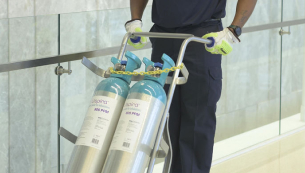
Think Again — With ULSPIRA Care+, our highly trained TGM team will count, inventory, replace and transport your NO tanks for your entire RT department.
Hassled by keeping enough iNO supplies on hand?
Think Again — Your ULSPIRA Care+ TGM team will track inventory, order supplies and stock your shelves so that you can focus on caring for your patients.
Concerned about storage space for gas cylinders?
Think Again — Opting for ULSPIRA Care+ means we store your tanks for you and our TGM team will deliver them as often as needed, keeping your storage area clutter‑free.
Worried your devices won't be ready for iNO treatment?
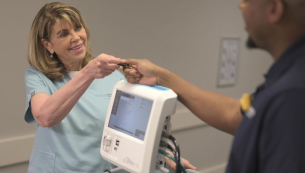
Think Again — Your TGM team will perform required high calibrations and Pre-Use Checks on your ULSPIRA TS™, so you’re ready to go when patients need therapy.
Focus on safety
Cylinder management and transport
Watch the video

Optimize RT time
High calibrations
Watch the video

Minimize emergencies
Complete inventory and supply management
Watch the video
Extend your patient‑centric approach
Per-patient treatment data collection for useful insights
Watch the video
ULSPIRA (nitric oxide) gas, for inhalation, is a vasodilator indicated to improve oxygenation and reduce the need for extracorporeal membrane oxygenation in term and near-term (>34 weeks gestation) neonates with hypoxic respiratory failure associated with clinical or echocardiographic evidence of pulmonary hypertension in conjunction with ventilatory support and other appropriate agents.
Contraindications
ULSPIRA is contraindicated in neonates dependent on right-to-left shunting of blood.
Warnings and Precautions
Adverse Reactions
The most common adverse reaction of ULSPIRA is hypotension.
Drug Interactions
Nitric Oxide donor compounds may increase the risk of developing methemoglobinemia.
Use With Delivery System
ULSPIRA must be administered using a calibrated FDA-cleared Nitric Oxide Delivery System operated by trained personnel. Only validated ventilator systems should be used in conjunction with ULSPIRA.
Adverse Events
You are encouraged to report negative side effects of prescription drugs to the FDA. Visit www.fda.gov/medwatch or call 1-800-FDA-1088.
Please see full ULSPIRA prescribing information for additional ULSPIRA safety and risk information.
Intended Use
The ULSPIRA TS Nitric Oxide Therapy System is intended for use by healthcare professionals for the delivery of nitric oxide (NO) and the monitoring of inspired NO, NO2 and O2 concentrations for a patient undergoing inhaled Nitric Oxide (iNO) therapy.
ULSPIRA TS must only be used in accordance with the indications, contraindications, warnings and precautions described in the nitric oxide drug packaging inserts and labeling, and is indicated for use in term and near-term (>34 weeks gestation) neonates with hypoxic respiratory failure associated with clinical or echocardiographic evidence of pulmonary hypertension. The primary targeted clinical setting is the Neonatal Intensive Care Unit (NICU) and secondary targeted clinical setting is the transport of neonates. Refer to this material prior to use.
In the case of an abrupt stop of inhaled NO gas delivery, withdrawal (rebound pulmonary hypertension) may occur. Possible side-effects of the inhaled NO gas therapy are further described in the nitric oxide drug packaging inserts and labeling.
ULSPIRA TS can be used with respiratory devices. Make sure that ULSPIRA TS is validated with the respiratory device you use. Validated respiratory devices are listed in the User's Manual.
Device Warnings:
Rx Only
Please complete the form to connect with an expert at Airgas.
Talk to an expert about your gases, hardgoods and safety needs.
ULSPIRA Indication and Important Safety Information
ULSPIRA (nitric oxide) gas, for inhalation, is a vasodilator indicated to improve oxygenation and reduce the need for extracorporeal membrane oxygenation in term and near-term (>34 weeks gestation) neonates with hypoxic respiratory failure associated with clinical or echocardiographic evidence of pulmonary hypertension in conjunction with ventilatory support and other appropriate agents.
Contraindications
ULSPIRA is contraindicated in neonates dependent on right-to-left shunting of blood.
Warnings and Precautions
Adverse Reactions
The most common adverse reaction of ULSPIRA is hypotension.
Drug Interactions
Nitric Oxide donor compounds may increase the risk of developing methemoglobinemia.
Use With Delivery System
ULSPIRA must be administered using a calibrated FDA-cleared Nitric Oxide Delivery System operated by trained personnel. Only validated ventilator systems should be used in conjunction with ULSPIRA.
Adverse Events
You are encouraged to report negative side effects of prescription drugs to the FDA. Visit www.fda.gov/medwatch or call 1-800-FDA-1088.
Please see full ULSPIRA prescribing information for additional ULSPIRA safety and risk information.